Showing posts with label Caldecott. Show all posts

Friday, April 28, 2017


Klassen, J. (2012). This is not My Hat. Somerville, MA: Candlewick Press.

A tiny fish has stolen a hat from a much bigger fish and thinks he has gotten away with it. He is swimming to hide in some tall sea grass.  A crab rats him out to the big fish. The small fish's hiding place is found. The last page shows the big fish with the hat on his head. Leading the reader to assume that tiny fish has met his maker.

Tiny kids love to read this book and the similar I Want My Hat Back. They are delighted to see the the final page and guess that the animal has been eaten by the bigger one. Jon Klassen has found a winning formula. The pictures are simple but appealing. they are set against a black background so the audience's attention is on the fish and nothing else. It is important to pay attention to the details like the larger fish's eyes. They are part of the story as well.

Where the Wild Things Are


Sendak, M. (1963). Where the Wild Things Are. New York, NY: Harper & Row.

When you have a "fresh" mouth and are driving your mother crazy, you get sent to your room. This is what happens to Max in this classic children's story. The rest of the tale is Max's imagination. He sails away to an island of true wild things. After they do their best to scare Max, he tames them with a stare in the eyes. They make him their king because truly is is the wildest of them all. The group of them then proceed to go around the jungle being a rowdy bunch. After a while, Max stops the group and send them to bed without supper. Sounds like Max has had some experience with this punishment. He leaves the island and returns to his bedroom to find a hot dinner waiting for him.

Children love this story. Teachers add it to their classroom library and it quickly becomes a favorite. Kids can relate to being sent to their room or time out when all they were doing was having some fun. Adults can relate to having those days when the children are running wild and driving them crazy. This story shows how a writer can take realistic fiction and blend it smoothly with fantasy. It also shows that having a vivid imagination is not thing bad thing.

Thursday, April 27, 2017

Balloons Over Broadway: The True Story of the Puppeteer of Macy's Parade


Sweet, M. (2011). Balloons Over Broadway: The True Story of the Puppeteer of Macy's Parade. New York, NY: Houghton Mifflin Books for Children.

A biography written about a man with an unusual but widely known job. The books explains how Tony Sarg became a puppeteer and created one of our most treasured holiday traditions.  When you look at the Macy's Thanksgiving Parade today it is hard to imagine that it started in the mind of one person.  He had and idea and had the gumption to put the idea into action.  Tony grew up creating and moved to London where he began to make puppets. After moving to New York City, he was approached by the owners of Macy's department store and asked to design a window display for the holidays. This turned in to coordinating a parade and eventually a parade of giant balloons. The balloons were made to make it easier for all to see no mater where they sat in the crowd.

This is pleasing biography to read to students during a study on inventors or biographies.The pictures were drawn by author Melissa Sweet. They pages are filled from edge to edge with pictures. There is no wasted white space. This also makes it easy for students to see the pictures no matter where they are sitting in your class. In addition to drawing there are pages with cutouts and photographs of real puppets. The pages are put together like a collage.  The story is also good to show that perseverance an admirable trait.

Sunday, April 2, 2017

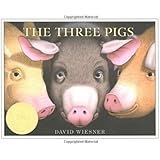
The Three Pigs


Wiesner, D. (2001). The Three Pigs. New York, NY: Clarion Books. 

The three pigs build three houses and the wolf comes and blows the first two houses down and walks up to the third house. Think you know the story? Well the characters in this story choose to change course and leave. The pigs take a paper airplane to new settings and pick up new characters from different stories along the way.

Wiesner's illustrations take the reader through different genres through different scenarios. He cleverly draws pictures to make it look like the pigs are leaving the pages of the book and going into the pages of another. The speech bubbles interjected in the middle of the normal text is an interesting way to show the characters interacting with each other outside of the story. It is a neat way to show the initial story is being interrupted.

Students would like this because it is not what they would be expected. Teachers can use this to teach character insight when they are writing. Or they can use it to teach how to make a surprise ending. 

Friday, March 3, 2017

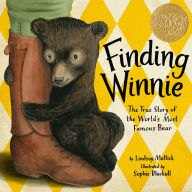
Finding Winnie


Mattick, L. (2015). Finding Winnie. New York, NY: Little, Brown, and Company.


Harry is a homesick solider sent overseas from Canada to fight in World War I. On the way he sees a man with a bear. Being that Harry is a veterinarian, he buys the bear and takes him with him on the train on the way to Europe. He names the bear Winnie to remind him of his home Winnipeg. Winnie becomes a mascot for the troop. When he gets too big to take care of, Harry sends him to the London Zoo. A young boy name Christopher Robin befriends the bear and his father sees the friendship and records their exploits. This becomes the inspiration for the Winnie the Pooh stories.  The story outside of this story is a mother telling a story to her son. The narrator is Harry Colebourn's relative. She is telling the boy story of their family's history and how she picked his name.

This is a sweet story to give a back story on a beloved character. It is appropriate for very young audiences. They would enjoy seeing someone with a bear as a pet.

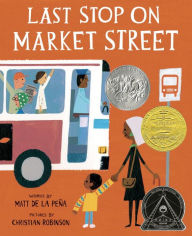
Last Stop On Market Street


De la Pena, M. (2015). Last Stop on Market Street. New York, NY: GP Putman Sons.

CJ is not too excited about having to go with his nana. He questions her on everything. Why do they have ride a bus? Why do they have to wait in the rain? Why? Why? His nana has a way of making the simplest of explanations sound wonderful and does a great job of making CJ and the reader appreciate all that is around them. Things like the sounds in nature, trees in the rain and a bus that breathes fire. The reader finds out the characters are going to a soup kitchen or homeless shelter to volunteer. Showing the family may not have a lot. They don't have a car, or can buy expensive mobile music players but they still can help others. 

I love this book for so many reasons. The message of charity for others is so important for young children. Not only is a great book to show how to appreciate your surroundings and look for the good things in every situation, but it is also full of great writing. When and author can write a kid's picture book with awesome writing and the young children can still understand, it is a must have.  I have used this book to teach about similes, descriptive language, strong verbiage, and complex sentences. We have used it to discuss different perspectives. Even though there are only 2 main characters, there are plenty of others that the readers sees in the pages as they read. The characters are so diverse; black, white, young, old, handicapped, different socio economic, and more.  You are presented with all of these variety without it being preached to you.  Everyone is just part of the book just like they would be part of the community. They just exist. 

Friday, February 10, 2017

Mufaro's Beautiful Daughter


Steptoe, J. (1987). Mufaro's Beautiful Daughters. New York, NY: Amistad, Harper Collins.

A take on the traditional Cinderella. This one is based in an African village. Mufaro has two daughters Manyara and Nyasha who are both very pretty but opposites in every other way. Manyara is mean to her sister, making sure to only do it when her dad is not watching. She teases her telling her that one day she will be queen and her nice younger sister will be her maid. Nyasha, the nice younger sister, is unbothered by her sister's negativity. She sees the good and beauty in everything even in a snake that shows up in her garden one day. 

One morning a message comes from the nearby city that the king is looking for a wife. Mufaro believes either one of his daughters are worthy to be queen. He tells them to prepare to go to the city tomorrow.  Manyara sneaks away during the night trying to get to the king first. In a forest, she runs into a small boy and refuses to give him food when he asks. She then meets a woman who tries to give her advice. Manyara doesn't care to take the woman's advice to heart and laughed at a grove of trees and ignored a man with his head under his arm. 

Then next morning the wedding party that Mufaro put together notices that Manyara has disappeared. They go on towards the city to meet the king without her. Nyasha encounters the same people her sister did earlier but she being nice reacts differently. She gives the young boy food, gives the old woman some sunflower seeds, and doesn't have the same encounter the same reaction from the grove of trees. When she sees the city she is in awe of its beauty. Then her sister runs up to her and their father horrified. Manyara tells them there is a five headed snake who scared her by telling her of all her rudeness.  Nyasha continues on anyway and sees the snake from the garden. He tells her that he the king and he was the young boy in the forest as well as the old lady. Because Nyasha had been kind to them, the king would marry her. 

The wedding preparations were made. Nyasha married the king and Manyara became her maid. 

This was also a recipient of the illustrator award. The pictures are gorgeous and would delight young children during a read aloud. They help tell the story.  As a teacher, I have used this story when teaching how to compare and contrast different text. Teachers can also use it to show how authors include evidence in text to show character traits. It as a good story that has stood the test of time of being a worthy story that entertains young people. It is also a worthy book because of its diversity in characters. The African characters and setting offer diversity to children's literature. 

Saturday, February 4, 2017

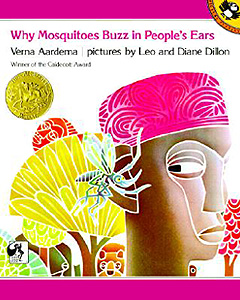
Why Mosquitoes Buzz in People's Ears


Aardema, V. (1975). Why Mosquitoes Buzz in People's Ear. New York, NY: Dial Books.

In this African folktale Verna Aardema, takes readers through a forest to see a giant chain of events. It all starts with an iguana getting bugged by a mosquito. He doesn't want to hear the insect talk anymore so he puts sticks in his ears. Then a python tries to speak to the iguana, but since he can't hear, he keeps walking. The python becomes fearful thinking the iguana is mad at him and is trying to hurt him. He slithers into a rabbit hole to hide. The rabbit seeing this gets scared and runs off. A crow sees the rabbit running and sends out a warning call to the other animals in the forest. A monkey hears this call and assumes a beast is coming to attack the animals. He bounds through the trees and inadvertently knocks an owlet out of the nest and it dies.

This upsets the mother owl so much, she refuses to do her job, waking the sun. So the forest stays under a night sky. The animals have a meeting to find out why the night is lasting so long. King Lion asks the Mother Owl. She says she is too upset to wake the sun because the monkey killed one of her babies. The animals proceed to unravel the story and end up at realizing this is all the mosquito's fault. They decide to punish the bug. He hears this and goes into hiding. He goes around and whining in people's ears asking if the other animals are still mad at him. Thus the reason why mosquitoes are always buzzing around people.

As all folktales do, this one explains an occurrence in nature. The illustrations are bright and not the typical drawings. Children do like this story. I have read it every year when we study traditional literature. The onomatopoeia in the story is a unique way to show "animal speak". Teachers could use this as a lesson to show why it is always important to not lie or how one lie can cause a series of bigger problems.  I like to use it to show sequence and cause and effect in literature. 

Friday, February 3, 2017

Sector 7


Wiesner, D. (1999). Sector 7. New York, NY: Clarion Books.

I love a wordless picture book. Using these books in the classroom, force students to use their observations and imaginations to tell the story. By doing this students see there is a whole lot more to reading than just saying the words on the page. Illustrations can help a reader understand an author's tone. Illustrations can also narrate a story. Readers can be an observer looking in on the characters or they can be drawn from a character's point of view. 

The pictures in this story are so detailed. Every little thing on the page is part of the story. And because it's wordless, the reader can create their own story. It may be very different than another readers interpretation. That is what good literature should do- be something different for every person who reads it.

In Sector 7, a class goes on a field trip to the Empire State Building. It is a cloudy day, normally a bad day to go visit a tall building known for great views. A little boy goes up to the observatory at the top of the building. He meets a cloud. They begin to ham around. The cloud takes the boy to the cloud depot located in sky. As they float, the reader can see they are going higher and higher. They arrive at Sector 7. The main character is taken around and sees how clouds hang out when they are not hanging in the sky. The clouds seem to be upset at drawing showing what their intended shapes should be. The boy begins to create new plans. He draws massive detailed fish. This pleases the clouds but not the humans who manage the clouds. They abruptly escort him out. A taxi cloud carries him back to the Empire State Building. His friend, the cloud is waiting for him, but it is time for him to leave with his class. The cloud decides to stowaway with the boy.  When they get downstairs and go outside the sky is full of clouds with the most spectacular marine shapes. The clouds have used the boy's plans after all and turned the sky into a underwater scene. This pleases the people back on Earth. It appears that the cloud management group may have changed their minds about the boy's drawing. They are now passing them out to clouds for the job assignments.


A Couple of Boys Have the Best Week Ever


Frazee, M. (2008). A Couple of Boys Have The Best Week Ever. Orlando, FL: Harcourt, Inc.

Life with boys. Thats the best quick summation of this book. James is going to visit his friend Eamon who is staying with his grandparents, Bill and Pam. While there, the boys will go to a nature day camp. However, the boys seem to enjoy spending more time indoors horsing around than exploring things in the outdoors. They spend their days playing with the air mattress, eating Pam's waffles, and watching TV. A side story is Bill wants to go visit Antartica and see the penguins. He repeatedly asks the boys if they want to visit the penguin exhibit at the museum. They don't seem too interested. After the week, the visit is drawing to a close. The camp is over. The boys spend a quiet night together and realize how interesting nature can be. They build their own Antartica display/exhibit for Bill using rocks and sticks.

The book is a sweet story on how boys can be when they are best buds. The best part is the snark included in the book. The text doesn't always match the dialogue and illustrations. The words say one thing, but the illustrations shows something else. For example Freeze writes, "He had never been away from home for an entire week, so he was very sad when his mother drove away." The picture shows James waving happily to his mother saying, "Bye" obviously not sad at all. The story is full of irony like this.  Adults would get a kick out of this part of the book. I did as it made me think of my son. I have well intentions but he has his own plans.

Blackout


Rocco, J. (2011). Blackout. New York, NY: Disney-Hyperion Books.

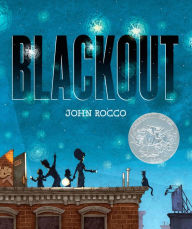
On a summer night in the city, the lights go out in the whole city. A family who was busy being busy now are "stuck" in the house with each other since nothing works. The parents try to keep the kids amused with shadow puppets and the such. Then it becomes too hot inside so they go up to the roof of the apartment building. After they enjoy the star watching and seeing other residents, they venture downstairs to the street. They get to enjoy the activities that are fun without electricity like playing in a fire hydrant, eating ice cream from a cart, sitting on the stoop enjoying each others company. Then the power comes back on. The members of the family begin to return to their normal routine. The girl in the story decides she likes it better with the lights off because she gets to spend time with her family. And they happily agree deciding that being back to normal isn't all it's cracked up to be.

A good book for young readers because there are few words on the page. The pictures also are inviting making it a good read aloud either for a class or at bedtime. This book would be a good springboard for discussions on how to spend time with family or what is really important in life. All students usually have spent time in a blackout. They may find something in common with the characters in this book. 

Caldecott and Caldecott Honor Books

Caldeciott and Caldecott Honor Books
Annotated Bibliography

1. Ness, E. (1966). Sam, Bangs, & Moonshine. New York, NY: Henry Holt and Company.

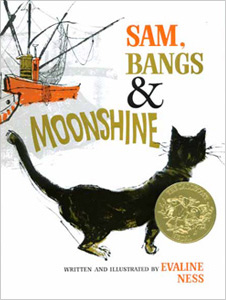
This is a story about a girl with a problem with lying. Samantha (Sam for short) lives in a fishing town with her father a fisherman and her cat Bangs. She has told stories or fibs to all the people in the town. However there is young boy who believes her stories and one day goes out on a quest based on one of her lies. It ends up putting him and Sam's cat in grave danger.

This would be a good story for parents to share with young children about possible repercussions that could result from lying. Even though I felt Sam wasn't lying so much as she just was a child with a vivid imagination, the story does teach a good lesson for children that there comes a time when they must start telling the truth.

The word choice would make this a great mentor text to teach students how to use vivid words to describe a scene. Phrases like " menacing rumble of thunder" and "grey ribbed curtain of rain" paint the picture of a terrible storm taking place.

 The art work is unique being that only three colors are used; gold, black, and gray. They are complimentary and don't take away from the story that is taking place.


2. Lobel, A. (1970). Frog and Toad Are Friends. New York, NY: Harper Collins Publishers.

"Once upon a time there were two good friends". That is how each of these short stories in this book could start. Each story shows the reader how these two character are there for each other from helping the one who is not a morning person, to looking for a lost button, and helping one get over their embarrassment. Just the typical stuff that good friends do for each other. 

I have a personal connection to this book. It was one of the first books I remember reading on my own.  I read it over and over again. The vocabulary and content is good for emerging readers. Parents would enjoy reading it to or with their child.

3. Lionni, L. (1967). Frederick. New York, NY:Alfred A. Knopf.

Everyone can contribute something to make society better. That is the message in the picture book by Leo Lionni. Frederick may not gather food or prepare for winter like the other mice, but when the supplies run low and the group needs a morale boost, Frederick's stories and imagination keep the other mice entertained during the winter season.

Sharing this book with young readers shows them that everyone has a part in a community whether it is a family, class, and or the world. No matter how small, each individual can contribute something. It also teaches tolerance for those that don't follow what others deem normal. The person who may be "inattentive" or "daydreaming" may indeed be absorbing the Earth's beauty in his or her own unique way and just waiting for the right time to share his or her vision with others.

4. Briggs Martin, J. (1998). Snowflake Bentley. New York, NY: Houghton Mifflin Company.

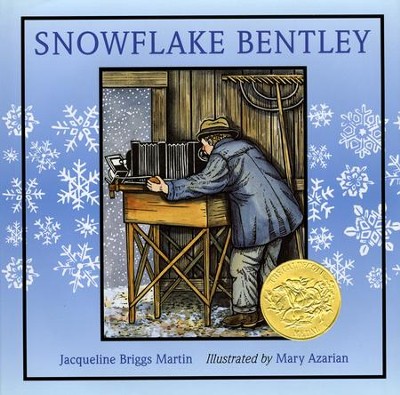
This book is a biography on the life of Willie Bentley.  The author cleverly used two types of writing styles to tell this story. It was written in narrative prose with non fiction text on the side of the pages. The main character Wilson Bentley is fascinated by snowflakes. He wants a way to share his love with others but off course snow melts easily.  He searches for a way to begin a collection but struggles.  Wilson was not satisfied with not finding answers. He very much was a self starter and problem solver. Eventually he figured out a way to pass snowflakes he finds to others. He used photography and magnified the image before he snapped the picture.  This allowed him to really narrow in on the intricate details of the snowflakes. 


5. Lester, J. (1994). John Henry. New Your, NY: Dial Books.

This picture book on the folk hero John Henry is more than just a folktale. It is an example of how authors can expertly transform readers to any place in time. Quality figurative language is used through out the book.  The author, Julius Lester, includes personification, hyperbole, and metaphors to tell his story. Students would enjoy the descriptive language and get a good sense of how strong supposedly John Henry was. It would be good to use during a unit on legends or folktales as well as during writing to show how a biography can be written.

John Henry was said to be extremely strong. From birth he commanded a the world take notice. He was faster than any horse and stronger than any machine. John Henry loved to compete to show off his ability. He used his strength to help build roads construct railroads by breaking through rocks and boulders (which are more like mountains). This competitive nature eventually ends up causing his death.

6.  Sendak, M. (1981). Outside Over There. New York, NY: Harper Collins. 

Ida's father is out to see. Her mother is upset. She watches over her sister. One night while she is playing her wonder horn to put her sister to sleep, goblins come in and kidnap the baby. They replace her with an ice sculpture. Ida doesn't notice that her sister has been substituted with an ice baby. Not even while she is holder her. When she does realize that her sister has been snatched, she dresses like her mother and goes out into the world to look for her. She steps out of the window backwards, and this apparently prevents her from seeing things correctly. She miraculously hears the voice of her father telling her to turn around. She does and finds the goblins. Only they are not goblins, they are babies themselves.  Ida plays her horn and the goblin babies begin to dance unwittingly. They end up dancing into a stream to what I can only assume causes them to drown. The only baby left that didn't get upset from the horn was Ida's sister.  She picks up the baby and they both return home.

This was a weird story. I can not see any reason to share it with young children. There is no positive message to be gained from it. In fact it may upset some really young readers or confuse them. That is what it did to me. Confuse.  I am left to wonder why this was selected as a Caldecott Honor book. 

7. Rocco, J. (2011). Blackout. New York, NY: Disney-Hyperion Books.

On a summer night in the city, the lights go out in the whole city. A family who was busy being busy now are "stuck" in the house with each other since nothing works. The parents try to keep the kids amused with shadow puppets and the such. Then it becomes too hot inside so they go up to the roof of the apartment building. After they enjoy the star watching and seeing other residents, they venture downstairs to the street. They get to enjoy the activities that are fun without electricity like playing in a fire hydrant, eating ice cream from a cart, sitting on the stoop enjoying each others company. Then the power comes back on. The members of the family begin to return to their normal routine. The girl in the story decides she likes it better with the lights off because she gets to spend time with her family. And they happily agree deciding that being back to normal isn't all it's cracked up to be.

A good book for young readers because there are few words on the page. The pictures also are inviting making it a good read aloud either for a class or at bedtime. This book would be a good springboard for discussions on how to spend time with family or what is really important in life. All students usually have spent time in a blackout. They may find something in common with the characters in this book. 

8.  Frazee, M. (2008). A Couple of Boys Have The Best Week Ever. Orlando, FL: Harcourt, Inc.

Life with boys. Thats the best quick summation of this book. James is going to visit his friend Eamon who is staying with his grandparents, Bill and Pam. While there, the boys will go to a nature day camp. However, the boys seem to enjoy spending more time indoors horsing around than exploring things in the outdoors. They spend their days playing with the air mattress, eating Pam's waffles, and watching TV. A side story is Bill wants to go visit Antartica and see the penguins. He repeatedly asks the boys if they want to visit the penguin exhibit at the museum. They don't seem too interested. After the week, the visit is drawing to a close. The camp is over. The boys spend a quiet night together and realize how interesting nature can be. They build their own Antartica display/exhibit for Bill using rocks and sticks.

The book is a sweet story on how boys can be when they are best buds. The best part is the snark included in the book. The text doesn't always match the dialogue and illustrations. The words say one thing, but the illustrations shows something else. For example Freeze writes, "He had never been away from home for an entire week, so he was very sad when his mother drove away." The picture shows James waving happily to his mother saying, "Bye" obviously not sad at all. The story is full of irony like this.  Adults would get a kick out of this part of the book. I did as it made me think of my son. I have well intentions but he has his own plans.

9.  Wiesner, D. (1999). Sector 7. New York, NY: Clarion Books.

I love a wordless picture book. Using these books in the classroom, force students to use their observations and imaginations to tell the story. By doing this students see there is a whole lot more to reading than just saying the words on the page. Illustrations can help a reader understand an author's tone. Illustrations can also narrate a story. Readers can be an observer looking in on the characters or they can be drawn from a character's point of view. 

The pictures in this story are so detailed. Every little thing on the page is part of the story. And because it's wordless, the reader can create their own story. It may be very different than another readers interpretation. That is what good literature should do- be something different for every person who reads it.

In Sector 7, a class goes on a field trip to the Empire State Building. It is a cloudy day, normally a bad day to go visit a tall building known for great views. A little boy goes up to the observatory at the top of the building. He meets a cloud. They begin to ham around. The cloud takes the boy to the cloud depot located in sky. As they float, the reader can see they are going higher and higher. They arrive at Sector 7. The main character is taken around and sees how clouds hang out when they are not hanging in the sky. The clouds seem to be upset at drawing showing what their intended shapes should be. The boy begins to create new plans. He draws massive detailed fish. This pleases the clouds but not the humans who manage the clouds. They abruptly escort him out. A taxi cloud carries him back to the Empire State Building. His friend, the cloud is waiting for him, but it is time for him to leave with his class. The cloud decides to stowaway with the boy.  When they get downstairs and go outside the sky is full of clouds with the most spectacular marine shapes. The clouds have used the boy's plans after all and turned the sky into a underwater scene. This pleases the people back on Earth. It appears that the cloud management group may have changed their minds about the boy's drawing. They are now passing them out to clouds for the job assignments.

10.  Aardema, V. (1975). Why Mosquitoes Buzz in People's Ear. New York, NY: Dial Books.

In this African folktale Verna Aardema, takes readers through a forest to see a giant chain of events. It all starts with an iguana getting bugged by a mosquito. He doesn't want to hear the insect talk anymore so he puts sticks in his ears. Then a python tries to speak to the iguana, but since he can't hear, he keeps walking. The python becomes fearful thinking the iguana is mad at him and is trying to hurt him. He slithers into a rabbit hole to hide. The rabbit seeing this gets scared and runs off. A crow sees the rabbit running and sends out a warning call to the other animals in the forest. A monkey hears this call and assumes a beast is coming to attack the animals. He bounds through the trees and inadvertently knocks an owlet out of the nest and it dies.

This upsets the mother owl so much, she refuses to do her job, waking the sun. So the forest stays under a night sky. The animals have a meeting to find out why the night is lasting so long. King Lion asks the Mother Owl. She says she is too upset to wake the sun because the monkey killed one of her babies. The animals proceed to unravel the story and end up at realizing this is all the mosquito's fault. They decide to punish the bug. He hears this and goes into hiding. He goes around and whining in people's ears asking if the other animals are still mad at him. Thus the reason why mosquitoes are always buzzing around people.

As all folktales do, this one explains an occurrence in nature. The illustrations are bright and not the typical drawings. Children do like this story. I have read it every year when we study traditional literature. The onomatopoeia in the story is a unique way to show "animal speak". Teachers could use this as a lesson to show why it is always important to not lie or how one lie can cause a series of bigger problems.  I like to use it to show sequence and cause and effect in literature. 

Thursday, February 2, 2017

Outside Over There


Sendak, M. (1981). Outside Over There. New York, NY: Harper Collins. 

Ida's father is out to see. Her mother is upset. She watches over her sister. One night while she is playing her wonder horn to put her sister to sleep, goblins come in and kidnap the baby. They replace her with an ice sculpture. Ida doesn't notice that her sister has been substituted with an ice baby. Not even while she is holder her. When she does realize that her sister has been snatched, she dresses like her mother and goes out into the world to look for her. She steps out of the window backwards, and this apparently prevents her from seeing things correctly. She miraculously hears the voice of her father telling her to turn around. She does and finds the goblins. Only they are not goblins, they are babies themselves.  Ida plays her horn and the goblin babies begin to dance unwittingly. They end up dancing into a stream to what I can only assume causes them to drown. The only baby left that didn't get upset from the horn was Ida's sister.  She picks up the baby and they both return home.

This was a weird story. I can not see any reason to share it with young children. There is no positive message to be gained from it. In fact it may upset some really young readers or confuse them. That is what it did to me. Confuse.  I am left to wonder why this was selected as a Caldecott Honor book. 


John Henry


Lester, J. (1994). John Henry. New Your, NY: Dial Books.

This picture book on the folk hero John Henry is more than just a folktale. It is an example of how authors can expertly transform readers to any place in time. Quality figurative language is used through out the book.  The author, Julius Lester, includes personification, hyperbole, and metaphors to tell his story. Students would enjoy the descriptive language and get a good sense of how strong supposedly John Henry was. It would be good to use during a unit on legends or folktales as well as during writing to show how a biography can be written.

John Henry was said to be extremely strong. From birth he commanded a the world take notice. He was faster than any horse and stronger than any machine. John Henry loved to compete to show off his ability. He used his strength to help build roads construct railroads by breaking through rocks and boulders (which are more like mountains). This competitive nature eventually ends up causing his death.

Frederick


Lionni, L. (1967). Frederick. New York, NY:Alfred A. Knopf.

Everyone can contribute something to make society better. That is the message in the picture book by Leo Lionni. Frederick may not gather food or prepare for winter like the other mice, but when the supplies run low and the group needs a morale boost, Frederick's stories and imagination keep the other mice entertained during the winter season.

Sharing this book with young readers shows them that everyone has a part in a community whether it is a family, class, and or the world. No matter how small, each individual can contribute something. It also teaches tolerance for those that don't follow what others deem normal. The person who may be "inattentive" or "daydreaming" may indeed be absorbing the Earth's beauty in his or her own unique way and just waiting for the right time to share his or her vision with others.

Snowflake Bentley


Briggs Martin, J. (1998). Snowflake Bentley. New York, NY: Houghton Mifflin Company.

This book is a biography on the life of Willie Bentley.  The author cleverly used two types of writing styles to tell this story. It was written in narrative prose with non fiction text on the side of the pages. The main character Wilson Bentley is fascinated by snowflakes. He wants a way to share his love with others but off course snow melts easily.  He searches for a way to begin a collection but struggles.  Wilson was not satisfied with not finding answers. He very much was a self starter and problem solver. Eventually he figured out a way to pass snowflakes he finds to others. He used photography and magnified the image before he snapped the picture.  This allowed him to really narrow in on the intricate details of the snowflakes. 


Tuesday, January 31, 2017

Frog and Toad Are Friends


Lobel, A. (1970). Frog and Toad Are Friends. New York, NY: Harper Collins Publishers.

"Once upon a time there were two good friends". That is how each of these short stories in this book could start. Each story shows the reader how these two character are there for each other from helping the one who is not a morning person, to looking for a lost button, and helping one get over their embarrassment. Just the typical stuff that good friends do for each other. 

I have a personal connection to this book. It was one of the first books I remember reading on my own.  I read it over and over again. The vocabulary and content is good for emerging readers. Parents would enjoy reading it to or with their child.


Monday, January 30, 2017

Sam, Bangs, & Moonshine


Ness, E. (1966). Sam, Bangs, & Moonshine. New York, NY: Henry Holt and Company.

This is a story about a girl with a problem with lying. Samantha (Sam for short) lives in a fishing town with her father  a fisherman and her cat Bangs. She has told stories or fibs to all the people in the town. However there is  young boy who believes her stories and one day goes out on a quest based on one of her lies. It ends up putting him and Sam's cat in grave danger. 

This would be a good story for parents to share with young children about possible repercussions that could result from lying.  Even though I felt Sam wasn't lying so much as she just was a child with a vivid imagination, the story does teach a good lesson for children that there comes a time when they must start telling the truth.

The word choice would make this a great mentor text to teach students how to use vivid words to describe a scene. Phrases like " menacing rumble of thunder" and "grey ribbed curtain of rain" paint the picture of a terrible storm taking place. 

The art work is unique being that only three colors are used; gold, black, and gray. They are complimentary and don't take away from the story that is taking place.