
Myers, W. (1999). Monster. New York, NY: Harper Collins.
Summary
Written in the format of drama or a movie script, Steve Harmon is a young black boy incarcerated for murder and armed robbery. He is a co-defendant with another male who actually may have shot the store owner whereas Steve served as a lookout. It is up to the reader to decide if Steve's role of scoping the drug store really makes him a Monster as the prosecutor labeled him. The story takes place during the trial and includes flashbacks of Steve's life in Harlem; sitting around with other kids being the butt of their jokes, kidding around with his little brother, and attending film club with Mr. Sawicki. The prosecutor works hard at tying Steve and James King, the other defendant, with Richard "Bobo" Evans, an intimidating career convict who admits to being part of the crime. The jury both in the book and the jury of readers have to decide whether to believe the criminals who are testifying to get lighter sentences or the trial attorneys who try to poke holes in their stories. Steve's best hope is to get on the stand and speak for himself. His attorney isn't too hopeful.Steve comes from a family with two college educated parents. As readers we ask ourselves. how a boy who seemed to be on a good path could end up on trial and be sent to prison for what could be the rest of his young life. When did he take such a wrong turn? By the end, we are left to ask did he take that wrong turn at all. Was he just a scapegoat by guys looking to get off easy? He could have just been in the wrong place at the wrong time. In the end, it looks like the jury gives Steve the benefit of the doubt and he is allowed to go home for a second chance.
Commentary
The way the novel is written in first person from Steve's perspective but also as a script gives insight into Steve's inner fears but also has him being an viewer like a director and not part of the story. Being able to see how Steve thinks let me know he was naive and was more than likely being taken advantage of by the older street smart males. I could see that even if he was part of the planning, he was far too naive to think his part was that important when it comes to the burglary. He is a good kid with a chance to find a way to have his voice heard as a filmmaker. Then you begin to wonder if the other characters like Osvaldo and James could have once been innocent boys who made a wrong turn unintentionally but got labeled by the judicial system and were never given a second chance. They appear so unlikable, but they're further down the delinquent road than Steve. The attorneys, correction officers, and court employees are portrayed as typical bit players who assume all the the people in the court room are guilty. There wasn't really any judicial workers that appeared sympathetic and wanted to help Steve. His parents on the other hand were different. We feel for them. This is a mother and father who have done what they could to keep their boys out of trouble. As a black parent, it is their worst fear to have a son in trouble with the law. You know there is very little they can do to help him while his is in this predicament and the odds are stacked against them. By the end, you cheer for them just as much as you cheer for Steve.
Connections
Click covers to open book pages.
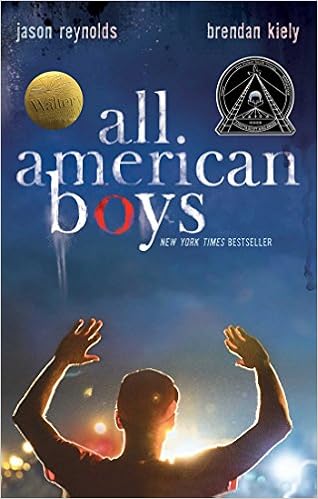

Connections to text
The overarching themes in this YA novel are crime doesn't pay or keep being good and things will turn out well. But it is not that simple. Being good is not always enough to have things turn out well. Being black and male is a double hurdle that is sometimes too big for many to get over. Once a boy is in the judicial system they are labeled monster and its a label they cannot not shed in the eyes of others. The prisons are awful for anyone and not meant to get inmates to reform. Prisoners do change, they are hardened so they can survive while incarcerated. And that hardening makes it close to impossible to survive once they are free. They only know prison life especially if they have been incarcerated since they were preteens. This books shows how if teens spend their formative years in detention centers they may end up as the title suggests: a monster.

No comments:
Post a Comment