Friday, March 31, 2017

Friday, March 24, 2017
Friday, March 10, 2017
Pura Belbre Award Books
Pura Belpre Award and Honor Books
Annotated Bibliography
1. Soto, G. (1995). Chato's Kitchen. New York, NY: G. P. Putnam's Sons.
Even the slickest cat can get out smarted. Chato the cat gets a meal by sneaking up on sparrows and catching unsuspecting mice. One day a family of mice move in next door and Chato sees an opportunity to have a meal and is relishing on how easy it will be to have the mice as dinner. But the mice invite a friend from their old neighborhood that will turn the tables on Chato.
This is a funny story with a delightful twist. Gary Soto includes some Spanish phrases through out the book. This would qualify the book as bilingual. The characters Chato and Novio Boy are written with some rather broad stereotypes. I think that might have been the author's intention. That is the only critique I would make. The illustrations are bright, large, and follow along with the details in the story. The illustrations are what received the Pura Belpre medal.
This would be a fun book to share with a young audience and have them try to guess what Chato's intentions really are.
2. Lomas Garza, C. (1996). In My Family. San Francisco, CA: Children's Book Press.
In My Family is a collection of short snippets of memories the author has of her life as a young girl. These recollections include watching her grandfather clean nopalitos, barbecues to celebrated birthdays, and how her family would prepare for a wedding. Each story is told in Enlish and translated into Spanish.
This book would be beneficial to have in a bilingual class room. English language learners that speak Spanish can practice their English language reading fluency. In any classroom, this book would be good mentor text to discuss writing down memories, or journaling. Students can see how you could just start with a memory and expound upon that to write a memoir.
I also believe this book is a good example to show another cultural present our country. Students can see how a family different from their's prepare for events like Easter and weddings. They then can compare it to how their family celebrates the same event. An awareness that our country is multicultural but still has common beliefs is important to teach in classrooms today.
The illustrations are all paintings by Carmen Lomas Garza too. There seem to be more details in the paintings than in some of her recollections. In fact some of her writings is just explaining what she put in the picture. They are not all written in narrative form.
3. Dorros, A. (2008). Papá and Me. New York, NY: Harper Collins Publishers.
It is very important that elementary age students be given multicultural books. They need to see themselves as much as possible to know that their lifestyle is a common one in the United States. This is a story about a boy and his father who spend the day together. They cook breakfast, go to the park, and ride the bus one day. The boy is so excited to be able to spend time with his father. The text is bilingual. The narrator speaks in English to the reader but in Spanish to his father. Exposure to more than one language can help increase fluency and build vocabulary. Once again it is the bright picutres that help tell the story. The pictures can help the non Spanish speaking students figure out what some of the words are that are spoken by the boy and his dad. The illustrations are bright, colorful, and festive. Students would enjoy looking at them during a read aloud.
It is so important for men especially minority men to be an active part n their children's especially their sons' lives. This book show the love between a father and son. Unfortunately many young boys do not get to experience this and grow up thinking that a relationship like this is not normal or shouldn't be expected. I think it is wonderful that not only does the book show a father son relationship they are a brown father and son. Books teach readers something even if it is not the intended message. When authors and illustrators make a conscious choice to include a minority in their art they are showing the world that that undeserved group is worthy to be acknowledged.
4. Mora, P. (2009). Gracias~Thanks. New York, NY: Lee & Low Books. Inc.
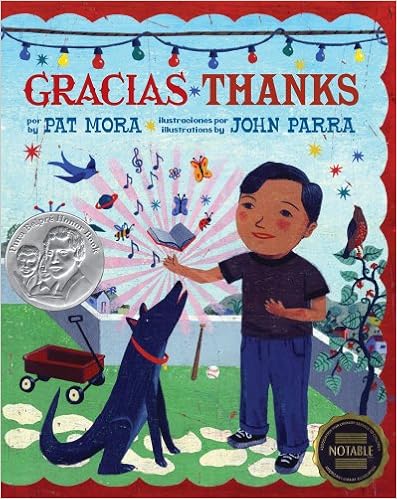
Written in free verse or prose. A young boy goes through a series of things around him and gives thanks. The explains shy he is so thankful for these things or people. For instance, "For the sun that wakes me up so I don't sleep for years and years and grow a long, white beard,thanks." The book is way to get students to look around them and find things to be grateful for. And to look for things that they may normally overlook and not think of as beneficial.
It is the illustrations in this book that have earned the Pure Belpré award. They are very bright and once again help tell the story as they add more detail than what is written.
5. Alacórn, F. (2001). Iguanas in the Snow:And Other Winter Poems. New York, NY: Lee & Low Books.
The illustrations are all paintings by Carmen Lomas Garza too. There seem to be more details in the paintings than in some of her recollections. In fact some of her writings is just explaining what she put in the picture. They are not all written in narrative form.
3. Dorros, A. (2008). Papá and Me. New York, NY: Harper Collins Publishers.
It is very important that elementary age students be given multicultural books. They need to see themselves as much as possible to know that their lifestyle is a common one in the United States. This is a story about a boy and his father who spend the day together. They cook breakfast, go to the park, and ride the bus one day. The boy is so excited to be able to spend time with his father. The text is bilingual. The narrator speaks in English to the reader but in Spanish to his father. Exposure to more than one language can help increase fluency and build vocabulary. Once again it is the bright picutres that help tell the story. The pictures can help the non Spanish speaking students figure out what some of the words are that are spoken by the boy and his dad. The illustrations are bright, colorful, and festive. Students would enjoy looking at them during a read aloud.
It is so important for men especially minority men to be an active part n their children's especially their sons' lives. This book show the love between a father and son. Unfortunately many young boys do not get to experience this and grow up thinking that a relationship like this is not normal or shouldn't be expected. I think it is wonderful that not only does the book show a father son relationship they are a brown father and son. Books teach readers something even if it is not the intended message. When authors and illustrators make a conscious choice to include a minority in their art they are showing the world that that undeserved group is worthy to be acknowledged.
4. Mora, P. (2009). Gracias~Thanks. New York, NY: Lee & Low Books. Inc.
Written in free verse or prose. A young boy goes through a series of things around him and gives thanks. The explains shy he is so thankful for these things or people. For instance, "For the sun that wakes me up so I don't sleep for years and years and grow a long, white beard,thanks." The book is way to get students to look around them and find things to be grateful for. And to look for things that they may normally overlook and not think of as beneficial.
It is the illustrations in this book that have earned the Pure Belpré award. They are very bright and once again help tell the story as they add more detail than what is written.
5. Alacórn, F. (2001). Iguanas in the Snow:And Other Winter Poems. New York, NY: Lee & Low Books.
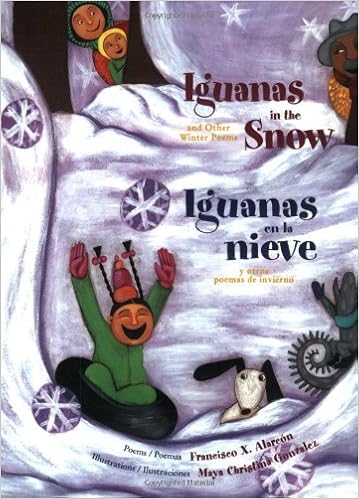
Iguanas in the Snow and Other Winter Poems is a collection of poems set in the San Francisco Bay Area. Poet Francisco Alarcón presents the poems in both English and Spanish offering readers a chance to experience the musicality of both languages. Maya Gonzalez’ illustrations are colorful and playful. In the afterword, parents will appreciate Alarcón’s explanation of where he got inspiration for his poetry.
6. Morales, Y. (2014). Viva Frida. New York, NY: Roaring Book Press.
6. Morales, Y. (2014). Viva Frida. New York, NY: Roaring Book Press.
There are a tremendous amount of books written about Frida Kahlo. It seems that ever since publishers realized that biographies were a hot genre for elementary readers, she became a popular subject. She had a very interesting life. This book illustrates what kind of person Frida was more than it shares information about her life. Readers see that she was a smart, caring person, who observed the world around her. It is written in very simple two or three word sentences for example " I search" or "I play". However it is the photographs that really tell Frida's story. The illustrations are a mixture of photographs of dolls and drawings. Through the illustrations we see Frida had a husband, cared for animals, and was an artist.
The words do not tell much about Frida but it is a beautiful book. Reading this out loud would be an interesting way to introduce Frida or to begin a class discussion on her life if you have already studied her
7. Dominguez, A (2013). Maria Had A Little Llama; María Tenía Una Llamita. New York, NY: Henry Holt & Co.
The traditional song Mary Had a Little Lamb is written in a delightful picture book in a new setting; Peru! This time it is Maria and she has a llama. The story is written one line per page in English. Then each line is translated into Spanish. This is a good early reader for young students who are familiar with the song and can use the predictability of the text to help with accuracy. Bilingual classes can add this to their classroom library as well. Both English and Spanish speaking students would benefit from it.
The illustrations are the real asset of this story. They let the reader know the story is taking place in Peru. Ms Dominguez included it the way Maria and the teacher is dressed and the appearance of the school. The character of Maria is the cutest character drawing I seen. Her wide smile on the front cover invites readers to open the book.
8. Tafolla, C. (2010). Fiesta Babies. New York, NY: Tricycle Press.
8. Tafolla, C. (2010). Fiesta Babies. New York, NY: Tricycle Press.
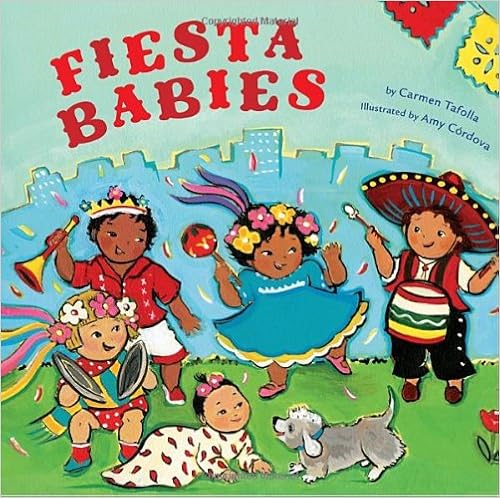
In Fiesta Babies written by Carmen Tafolla and illustrated by Amy Córdova, the babies enjoy the festivities of Fiesta in San Antonio. They march in parades, sing mariachi songs, and dance two-by-two. Written in delightful rhyme, Fiesta Babies provides parents an opportunity to introduce young children to poetry and fiesta. The glossary of Spanish words at the back of the book is an excellent resource for helping young readers build their vocabulary.
A picture book small enough for small hands, this would be a good book to have in nurseries or early childhood classrooms. The babies are painted in bright colors. The San Antonio skyline is a backdrop. This is a cute book to add to a collection.
9. Tonatiuh, D. (2011). Dear Primo. New York, NY: Abrams Books for Young Readers.
9. Tonatiuh, D. (2011). Dear Primo. New York, NY: Abrams Books for Young Readers.
Charlie and his cousin Carlitos are cousins that live in separate countries. Charlie lives in the United States while Carlitos lives in Mexico. Through their letters the boys show how their lives are different but still very similar. One lives on a farm surrounded by animals. The other lives in a big city surrounded by skyscrapers. They still both go to school and play games with their friends. Both boys are so excited to read about each other's lives and eager to share their own that they resolve to have each other visit their city.
This book was written to shine a light on how lives in two separate countries are still basically the same. Each country has its unique way to celebrate. Each boy has toys, plays games, goes to school, and is expected to help their family. They just do it differently. ESL classes could use this to lead a discussion on cultural differences. I think if there was a student from Mexico they would enjoy reading a book that includes things they may have done or had in their former country.
The book is also bilingual. Students learning English would benefit from reading it because the author uses his story to explain what different English words and mean. He also explains what is happening during some American traditions. The author does the same thing for the Spanish words and cultural. So English students can learn Spanish as well. In fact each picture illustrating life in Mexico is labeled in Spanish. In essence those pages become a picture dictionary.
The illustrations were recognized by the Pura Belpré committee. They are hand drawn then put together like a collage. They way Mr. Tonatiuh placed the characters' heads, and large hands and feet on the page made it seem like they were moving on the page. At least in my head, I pictured movement. The colors used help tell the story. Browns and oranges for the ones showing life in Mexico. Granite and grays for scenes in the big city.
10. Krull, K (2003). Harvesting Hope: The Story of Cesar Chavez. New York, NY: Harcourt, Inc.
10. Krull, K (2003). Harvesting Hope: The Story of Cesar Chavez. New York, NY: Harcourt, Inc.
This is a biography on the life of Cesar Chavez. The author writes about Cesar's life from a young boy to the farm workers' march he led in California. Cesar and his family were doing rather well in Arizona, Then due to a drought they lost their farm and home. They were forced to move to California to look for work. As he got older, Cesar helped organize farm workers to ask for higher wages, shorter hours, and better working conditions. He helped to create the National Farm Workers Association. They gathered workers and organized a march from Delano to Sacramento. The march wasn't easy. It damaging to their bodies and not everyone agreed with what they were doing. By the time they reached Sacramento, word had spread about their working conditions. More people supported their cause. Cesar was able to negotiate with the farm owners and get higher wages and better conditions for the workers.
I use this book every year when my class studies biographies. It won an illustrator honor award but the story is written well too. I believe students in 3rd grade or higher could read the story independently and gather a lot from it.
Papá and Me

Dorros, A. (2008). Papá and Me. New York, NY: Harper Collins Publishers.
It is very important that elementary age students be given multicultural books. They need to see themselves as much as possible to know that their lifestyle is a common one in the United States. This is a story about a boy and his father who spend the day together. They cook breakfast, go to the park, and ride the bus one day. The boy is so excited to be able to spend time with his father. The text is bilingual. The narrator speaks in English to the reader but in Spanish to his father. Exposure to more than one language can help increase fluency and build vocabulary. Once again it is the bright picutres that help tell the story. The pictures can help the non Spanish speaking students figure out what some of the words are that are spoken by the boy and his dad. The illustrations are bright, colorful, and festive. Students would enjoy looking at them during a read aloud.
It is so important for men especially minority men to be an active part n their children's especially their sons' lives. This book show the love between a father and son. Unfortunately many young boys do not get to experience this and grow up thinking that a relationship like this is not normal or shouldn't be expected. I think it is wonderful that not only does the book show a father son relationship they are a brown father and son. Books teach readers something even if it is not the intended message. When authors and illustrators make a conscious choice to include a minority in their art they are showing the world that that undeserved group is worthy to be acknowledged.
It is very important that elementary age students be given multicultural books. They need to see themselves as much as possible to know that their lifestyle is a common one in the United States. This is a story about a boy and his father who spend the day together. They cook breakfast, go to the park, and ride the bus one day. The boy is so excited to be able to spend time with his father. The text is bilingual. The narrator speaks in English to the reader but in Spanish to his father. Exposure to more than one language can help increase fluency and build vocabulary. Once again it is the bright picutres that help tell the story. The pictures can help the non Spanish speaking students figure out what some of the words are that are spoken by the boy and his dad. The illustrations are bright, colorful, and festive. Students would enjoy looking at them during a read aloud.
It is so important for men especially minority men to be an active part n their children's especially their sons' lives. This book show the love between a father and son. Unfortunately many young boys do not get to experience this and grow up thinking that a relationship like this is not normal or shouldn't be expected. I think it is wonderful that not only does the book show a father son relationship they are a brown father and son. Books teach readers something even if it is not the intended message. When authors and illustrators make a conscious choice to include a minority in their art they are showing the world that that undeserved group is worthy to be acknowledged.
Gracias Thanks
Mora, P. (2009). Gracias~Thanks. New York, NY: Lee & Low Books. Inc.
Written in free verse or prose. A young boy goes through a series of things around him and gives thanks. The explains shy he is so thankful for these things or people. For instance, "For the sun that wakes me up so I don't sleep for years and years and grow a long, white beard,thanks." The book is way to get students to look around them and find things to be grateful for. And to look for things that they may normally overlook and not think of as beneficial.
It is the illustrations in this book that have earned the Pure Belpré award. They are very bright and once again help tell the story as they add more detail than what is written.
Iguanas in the Snow and Other Winter Poems
Alacórn, F. (2001). Iguanas in the Snow:And Other Winter Poems. New York, NY: Lee & Low Books.
Iguanas in the Snow and Other Winter Poems is
a collection of poems set in the San Francisco Bay Area. Poet Francisco Alarcón presents the poems in both English and Spanish offering
readers a chance to experience the musicality of both languages. Maya Gonzalez’ illustrations are colorful and
playful. In the afterword, parents will
appreciate Alarcón’s
explanation of where he got inspiration for his poetry.
Viva Frida
Morales, Y. (2014). Viva Frida. New York, NY: Roaring Book Press.
There are a tremendous amount of books written about Frida Kahlo. It seems that ever since publishers realized that biographies were a hot genre for elementary readers, she became a popular subject. She had a very interesting life. This book illustrates what kind of person Frida was more than it shares information about her life. Readers see that she was a smart, caring person, who observed the world around her. It is written in very simple two or three word sentences for example " I search" or "I play". However it is the photographs that really tell Frida's story. The illustrations are a mixture of photographs of dolls and drawings. Through the illustrations we see Frida had a husband, cared for animals, and was an artist.
The words do not tell much about Frida but it is a beautiful book. Reading this out loud would be an interesting way to introduce Frida or to begin a class discussion on her life if you have already studied her.
Maria Had A Little Llama: María Tenía Una Llamita

Dominguez, A (2013). Maria Had A Little Llama; María Tenía Una Llamita. New York, NY: Henry Holt & Co.
The traditional song Mary Had a Little Lamb is written in a delightful picture book in a new setting; Peru! This time it is Maria and she has a llama. The story is written one line per page in English. Then each line is translated into Spanish. This is a good early reader for young students who are familiar with the song and can use the predictability of the text to help with accuracy. Bilingual classes can add this to their classroom library as well. Both English and Spanish speaking students would benefit from it.
The illustrations are the real asset of this story. They let the reader know the story is taking place in Peru. Ms Dominguez included it the way Maria and the teacher is dressed and the appearance of the school. The character of Maria is the cutest character drawing I seen. Her wide smile on the front cover invites readers to open the book.
Fiesta Babies
Tafolla, C. (2010). Fiesta Babies. New York, NY: Tricycle Press.
In Fiesta
Babies written by Carmen Tafolla and illustrated by Amy Córdova, the babies enjoy the festivities
of Fiesta in San Antonio. They march in parades, sing mariachi songs,
and dance two-by-two. Written in
delightful rhyme, Fiesta Babies provides
parents an opportunity to introduce young children to poetry and fiesta. The glossary of Spanish words at the back of
the book is an excellent resource for helping young readers build their
vocabulary.
A picture book small enough for small hands, this would be a good book to have in nurseries or early childhood classrooms. The babies are painted in bright colors. The San Antonio skyline is a backdrop. This is a cute book to add to a collection.
Dear Primo
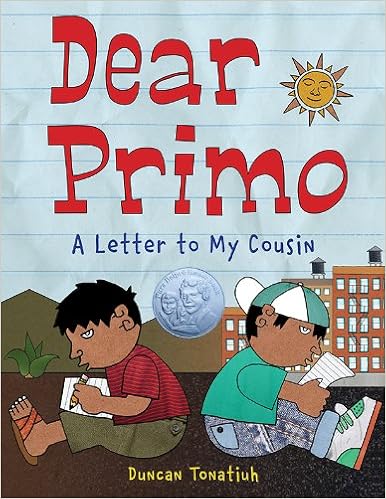
Tonatiuh, D. (2011). Dear Primo. New York, NY: Abrams Books for Young Readers.
Charlie and his cousin Carlitos are cousins that live in separate countries. Charlie lives in the United States while Carlitos lives in Mexico. Through their letters the boys show how their lives are different but still very similar. One lives on a farm surrounded by animals. The other lives in a big city surrounded by skyscrapers. They still both go to school and play games with their friends. Both boys are so excited to read about each other's lives and eager to share their own that they resolve to have each other visit their city.
This book was written to shine a light on how lives in two separate countries are still basically the same. Each country has its unique way to celebrate. Each boy has toys, plays games, goes to school, and is expected to help their family. They just do it differently. ESL classes could use this to lead a discussion on cultural differences. I think if there was a student from Mexico they would enjoy reading a book that includes things they may have done or had in their former country.
The book is also bilingual. Students learning English would benefit from reading it because the author uses his story to explain what different English words and mean. He also explains what is happening during some American traditions. The author does the same thing for the Spanish words and cultural. So English students can learn Spanish as well. In fact each picture illustrating life in Mexico is labeled in Spanish. In essence those pages become a picture dictionary.
The illustrations were recognized by the Pura Belpré committee. They are hand drawn then put together like a collage. They way Mr. Tonatiuh placed the characters' heads, and large hands and feet on the page made it seem like they were moving on the page. At least in my head, I pictured movement. The colors used help tell the story. Browns and oranges for the ones showing life in Mexico. Granite and grays for scenes in the big city.
In My Family

Lomas Garza, C. (1996). In My Family. San Francisco, CA: Children's Book Press.
In My Family is a collection of short snippets of memories the author has of her life as a young girl. These recollections include watching her grandfather clean nopalitos, barbecues to celebrated birthdays, and how her family would prepare for a wedding. Each story is told in Enlish and translated into Spanish.
This book would be beneficial to have in a bilingual class room. English language learners that speak Spanish can practice their English language reading fluency. In any classroom, this book would be good mentor text to discuss writing down memories, or journaling. Students can see how you could just start with a memory and expound upon that to write a memoir.
I also believe this book is a good example to show another cultural present our country. Students can see how a family different from their's prepare for events like Easter and weddings. They then can compare it to how their family celebrates the same event. An awareness that our country is multicultural but still has common beliefs is important to teach in classrooms today.
The illustrations are all paintings by Carmen Lomas Garza too. There seem to be more details in the paintings than in some of her recollections. In fact some of her writings is just explaining what she put in the picture. They are not all written in narrative form.
The illustrations are all paintings by Carmen Lomas Garza too. There seem to be more details in the paintings than in some of her recollections. In fact some of her writings is just explaining what she put in the picture. They are not all written in narrative form.
Thursday, March 9, 2017
Harvesting Hope

Krull, K (2003). Harvesting Hope: The Story of Cesar Chavez. New York, NY: Harcourt, Inc.
This is a biography on the life of Cesar Chavez. The author writes about Cesar's life from a young boy to the farm workers' march he led in California. Cesar and his family were doing rather well in Arizona, Then due to a drought they lost their farm and home. They were forced to move to California to look for work. As he got older, Cesar helped organize farm workers to ask for higher wages, shorter hours, and better working conditions. He helped to create the National Farm Workers Association. They gathered workers and organized a march from Delano to Sacramento. The march wasn't easy. It damaging to their bodies and not everyone agreed with what they were doing. By the time they reached Sacramento, word had spread about their working conditions. More people supported their cause. Cesar was able to negotiate with the farm owners and get higher wages and better conditions for the workers.
I use this book every year when my class studies biographies. It won an illustrator honor award but the story is written well too. I believe students in 3rd grade or higher could read the story independently and gather a lot from it.
Chato's Kitchen
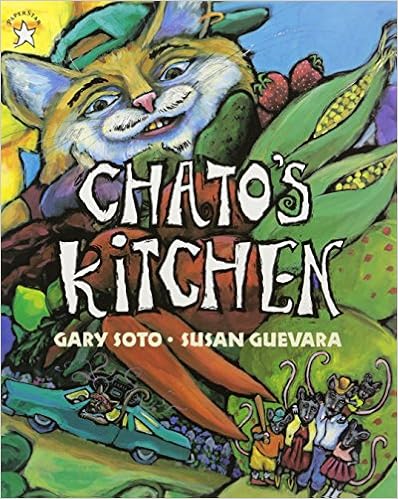
Soto, G. (1995). Chato's Kitchen. New York, NY: G. P. Putnam's Sons.
Even the slickest cat can get out smarted. Chato the cat gets a meal by sneaking up on sparrows and catching unsuspecting mice. One day a family of mice move in next door and Chato sees an opportunity to have a meal and is relishing on how easy it will be to have the mice as dinner. But the mice invite a friend from their old neighborhood that will turn the tables on Chato.
This is a funny story with a delightful twist. Gary Soto includes some Spanish phrases through out the book. This would qualify the book as bilingual. The characters Chato and Novio Boy are written with some rather broad stereotypes. I think that might have been the author's intention. That is the only critique I would make. The illustrations are bright, large, and follow along with the details in the story. The illustrations are what received the Pura Belpre medal.
This would be a fun book to share with a young audience and have them try to guess what Chato's intentions really are.
Saturday, March 4, 2017
What Pet Should I Get?
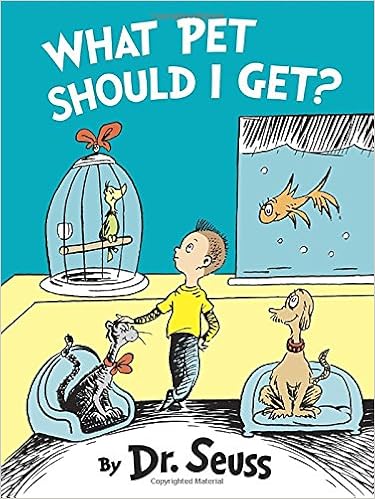
Dr. Suess. (2015). What Pet Should I Get? New York, NY: Random House Inc.
Trying to decide what pet a family should get becomes extended fun when a brother and sister go to a store to pick a pet. From a dog and a cat to Seuss creatures like a yent, the reader goes along with the narrator as he decides what to get. The rhyming in this book is true Dr. Seuss and make if fun to read. I would also like to use it to show how a story could also be a poem. There is an obvious rhythm and beat. The illustrations are obvious Dr Seuss. The cat, dog, boy, and girl look normal but he creatures with the extra long legs, and necks look like something from Whoville.
I Wish You More

Krouse Rosenthal, A. (2015). I Wish You More. San Francisco, CA: Chronicle Books.
Some books are obvious picks for best sellers. This is one of them. This book is like Love You Forever by Robert Munsch. It expresses a parent's love for their child. The narrator wants his/her child to stay little just a little bit longer and be able to enjoy all the small things children can do. What parent hasn't wished this at one time when looking at his or her child doing something great or looking especially cute? Parents could get this for young children and read it at bedtime. It is a quick read with appropriate word choice that young people could understand. I really love the pictures. Some are huge and fill out two facing pages. They all help to paint the picture of children having fun being children.
When You Babysit Gramdma

Regan, J. (2014). How to Babysit Grandma. New York, NY: Random House.
A girl explains how to babysit a grandma. She list all the fun things a child and her grandma could do; things like swing, play dress up, bake cookies, and play pretend. It is a sweet book more appropriate for young audiences. The text is very simple but the pictures are big and some fill the bleed and go over to the next page. As educators, we could use this book and How to Babysit Grandpa to begin to teach very young writes how to write a How to paper. The formula is a good pattern for writers to follow, identify the topic provide material, and then elaborate.
Friday, March 3, 2017
Dragons Love Tacos
Rubin, A. (2012). Dragons Love Tacos. New York, NY: Penguin Young Reader.
Dragons love tacos. They will eat any kind but they cannot have spicy salsa. It makes them sick and causes them to blow fire out their mouths. One day while attending, the dragons ingest salsa accidentally and end up blowing fire in the boy's house. Then they must help him rebuild.
This book is appropriate for a very young audience. They may find it amusing. The pictures are really what my kids laugh at not the story itself. It is a cute way to teach responsibility or cause and effect.
Goodnight, Goodnight, Construction Site

Duskey, S. (2011). Goodnight, Goodnight, Construction Site. San Francisco, CA: Chronicle Books.
The machinery at a construction site are tired and ready to go to sleep. One at a time the readers reads about each truck's busy day and then tucks them in with a "Goodnight". I can see how this has been on the best seller's list for so long. It is a sweet book to read to a young person at home. Written in rhyme, young readers would enjoy coming up with the final word on each line as they recognize the rhyme pattern.
Finding Winnie
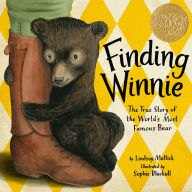
Mattick, L. (2015). Finding Winnie. New York, NY: Little, Brown, and Company.
This is a sweet story to give a back story on a beloved character. It is appropriate for very young audiences. They would enjoy seeing someone with a bear as a pet.
The Day The Crayons Quit
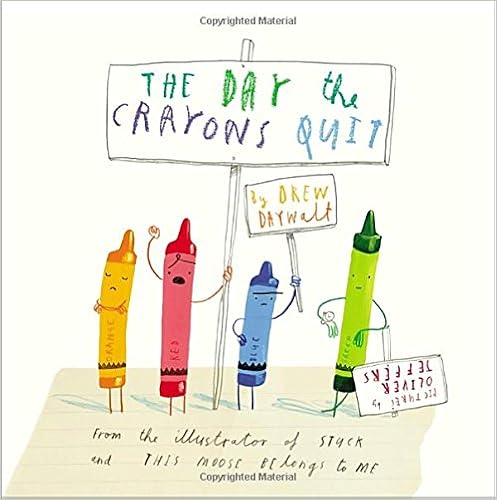
Daywalt, D. (2013). The Day the Crayons Quit. New York, NY: Penguin Young Readers.
Duncan's crayons have had enough! They are tired of being used up and not having their feelings considered. Red feels overused. Beige feels like he is never used to color anything worthwhile. Blue is worn down. What is a boy to do? The final page lets us see Duncan used the crayons to color an unconventional picture. The green was used for water. The pink made a dinosaur. The sky was a bright yellow. Duncan showed that art doesn't have to follow rules.
Every time I would read this I would think the author must have been sitting around and saw a crayon just laying around and wondered what it would do if it could talk. He came up with a great conversation for the crayons. It is a great book to read to young readers. The story is great but the pictures of the crayons as little people are bound to please too.
New York Times Best Sellers List
New York Best Seller List
Annotated Bibliography
1. De la Pena, M. (2015). Last Stop on Market Street. New York, NY: GP Putman Sons.
CJ is not too excited about having to go with his nana. He questions her on everything. Why do they have ride a bus? Why do they have to wait in the rain? Why? Why? His nana has a way of making the simplest of explanations sound wonderful and does a great job of making CJ and the reader appreciate all that is around them. Things like the sounds in nature, trees in the rain and a bus that breathes fire. The reader finds out the characters are going to a soup kitchen or homeless shelter to volunteer. Showing the family may not have a lot. They don't have a car, or can buy expensive mobile music players but they still can help others.
I love this book for so many reasons. The message of charity for others is so important for young children. Not only is it a great book to show how to appreciate your surroundings and look for the good things in every situation, but it is also full of great writing. When and author can write a kid's picture book with awesome writing and the young children can still understand, it is a must have. I have used this book to teach about similes, descriptive language, strong verbiage, and complex sentences. We have used it to discuss different perspectives. Even though there are only 2 main characters, there are plenty of others that the readers sees in the pages as they read. The characters are so diverse; black, white, young, old, handicapped, different socio-economic, and more. You are presented with all of this variety without it being preached to you. Everyone is just part of the book just like they would be part of the community.
2. Novak, B. (2014). The Book With No Pictures. New York, NY: Dial Books
A book by a comedian is bound to have something for adults to find funny. You can find it funny that a book on the New York Times Children's Picture Book best sellers list doesn't have any pictures. BJ Novak's book makes young kids laugh even though they do not have pictures to look at. It is all about the words and the image they put in the readers' head. The words chosen to be a part of this book are funny. The reader has to say silly nonsense words and if you are reading to a class of kindergarteners they will laugh uncontrollably.
There is not much to say about the book about why to choose it to read to kids other than they will find it funny. The sentence structure is not complex and the language doesn't serve a purpose other than to be humorous. I would read this book more as a bed time story.
3. Yamada, K. (2016). What Do You Do With a Problem? Seattle, WA: Compendium Inc.
This book explains to young readers how to solve a problem. The unique thing is, the problem is represented as a gray cloud. It follows the narrator through out the book. The readers see that worrying, hiding, and ignoring it do not make the cloud go away. Finally the young boy tackles the the cloud and opportunity comes out of it.
As adults we understand and appreciate the author's message. It is an important message for young readers to hear. They shouldn't run from problems as they will just follow you and get bigger. However if you are 3 or 4 years old you may think of this book in the literal sense. Gray clouds will follow you until you tackle it and make it stop. This is a good book to read out loud to discuss problem solving for young classes. You could also use it with older students to show personification and lead a lesson on how to write and give non human things human characteristics.
4. Daywalt, D. (2013). The Day the Crayons Quit. New York, NY: Penguin Young Readers.
Duncan's crayons have had enough! They are tired of being used up and not having their feelings considered. Red feels overused. Beige feels like he is never used to color anything worthwhile. Blue is worn down. What is a boy to do? The final page lets us see Duncan used the crayons to color an unconventional picture. The green was used for water. The pink made a dinosaur. The sky was a bright yellow. Duncan showed that art doesn't have to follow rules.
Every time I would read this I would think the author must have been sitting around and saw a crayon just laying around and wondered what it would do if it could talk. He came up with a great conversation for the crayons. It is a great book to read to young readers. The story is great but the pictures of the crayons as little people are bound to please too.
5. Mattick, L. (2015). Finding Winnie. New York, NY: Little, Brown, and Company.
This is a sweet story to give a back story on a beloved character. It is appropriate for very young audiences. They would enjoy seeing someone with a bear as a pet.
6. Duskey, S. (2011). Goodnight, Goodnight, Construction Site. San Francisco, CA: Chronicle Books.
The machinery at a construction site are tired and ready to go to sleep. One at a time the readers reads about each truck's busy day and then tucks them in with a "Goodnight". I can see how this has been on the best seller's list for so long. It is a sweet book to read to a young person at home. Written in rhyme, young readers would enjoy coming up with the final word on each line as they recognize the rhyme pattern.
7. Rubin, A. (2012). Dragons Love Tacos. New York, NY: Penguin Young Reader.
7. Rubin, A. (2012). Dragons Love Tacos. New York, NY: Penguin Young Reader.
Dragons love tacos. They will eat any kind but they cannot have spicy salsa. It makes them sick and causes them to blow fire out their mouths. One day while attending, the dragons ingest salsa accidentally and end up blowing fire in the boy's house. Then they must help him rebuild.
This book is appropriate for a very young audience. They may find it amusing. The pictures are really what my kids laugh at not the story itself. It is a cute way to teach responsibility or cause and effect.
8. Regan, J. (2014). How to Babysit Grandma. New York, NY: Random House.
A girl explains how to babysit a grandma. She list all the fun things a child and her grandma could do; things like swing, play dress up, bake cookies, and play pretend. It is a sweet book more appropriate for young audiences. The text is very simple but the pictures are big and some fill the bleed and go over to the next page. As educators, we could use this book and How to Babysit Grandpa to begin to teach very young writes how to write a How to paper. The formula is a good pattern for writers to follow, identify the topic provide material, and then elaborate.
9. Krouse Rosenthal, A. (2015). I Wish You More. San Francisco, CA: Chronicle Books.
9. Krouse Rosenthal, A. (2015). I Wish You More. San Francisco, CA: Chronicle Books.
Some books are obvious picks for best sellers. This is one of them. This book is like Love You Forever by Robert Munsch. It expresses a parent's love for their child. The narrator wants his/her child to stay little just a little bit longer and be able to enjoy all the small things children can do. What parent hasn't wished this at one time when looking at his or her child doing something great or looking especially cute? Parents could get this for young children and read it at bedtime. It is a quick read with appropriate word choice that young people could understand. I really love the pictures. Some are huge and fill out two facing pages. They all help to paint the picture of children having fun being children.
10. Dr. Suess. (2015). What Pet Should I Get? New York, NY: Random House Inc.
Trying to decide what pet a family should get becomes extended fun when a brother and sister go to a store to pick a pet. From a dog and a cat to Seuss creatures like a yent, the reader goes along with the narrator as he decides what to get. The rhyming in this book is true Dr. Seuss and make if fun to read. I would also like to use it to show how a story could also be a poem. There is an obvious rhythm and beat. The illustrations are obvious Dr Seuss. The cat, dog, boy, and girl look normal but he creatures with the extra long legs, and necks look like something from Whoville.
What Do You Do with a Problem?
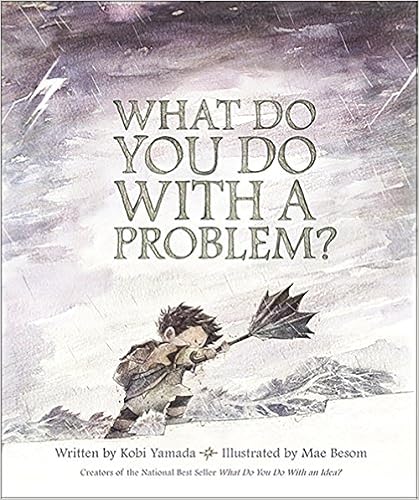
Yamada, K. (2016). What Do You Do With a Problem? Seattle, WA: Compendium Inc.
This book explains to young readers how to solve a problem. The unique thing is, the problem is represented as a gray cloud. It follows the narrator through out the book. The readers see that worrying, hiding, and ignoring it do not make the cloud go away. Finally the young boy tackles the the cloud and opportunity comes out of it.
As adults we understand and appreciate the author's message. It is an important message for young readers to hear. They shouldn't run from problems as they will just follow you and get bigger. However if you are 3 or 4 years old you may think of this book in the literal sense. Gray clouds will follow you until you tackle it and make it stop. This is a good book to read out loud to discuss problem solving for young classes. You could also use it with older students to show personification and lead a lesson on how to write and give non human things human characteristics.
The Book With No Pictures

Novak, B. (2014). The Book With No Pictures. New York, NY: Dial Books
A book by a comedian is bound to have something for adults to find funny. You can find it funny that a book on the New York Times Children's Picture Book best sellers list doesn't have any pictures. BJ Novak's book makes young kids laugh even though they do not have pictures to look at. It is all about the words and the image they put in the readers' head. The words chosen to be a part of this book are funny. The reader has to say silly nonsense words and if you are reading to a class of kindergarteners they will laugh uncontrollably.
There is not much to say about the book about why to choose it to read to kids other than they will find it funny. The sentence structure is not complex and the language doesn't serve a purpose other than to be humorous. I would read this book more as a bed time story.
Last Stop On Market Street
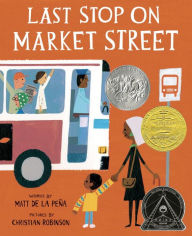
De la Pena, M. (2015). Last Stop on Market Street. New York, NY: GP Putman Sons.
CJ is not too excited about having to go with his nana. He questions her on everything. Why do they have ride a bus? Why do they have to wait in the rain? Why? Why? His nana has a way of making the simplest of explanations sound wonderful and does a great job of making CJ and the reader appreciate all that is around them. Things like the sounds in nature, trees in the rain and a bus that breathes fire. The reader finds out the characters are going to a soup kitchen or homeless shelter to volunteer. Showing the family may not have a lot. They don't have a car, or can buy expensive mobile music players but they still can help others.
I love this book for so many reasons. The message of charity for others is so important for young children. Not only is a great book to show how to appreciate your surroundings and look for the good things in every situation, but it is also full of great writing. When and author can write a kid's picture book with awesome writing and the young children can still understand, it is a must have. I have used this book to teach about similes, descriptive language, strong verbiage, and complex sentences. We have used it to discuss different perspectives. Even though there are only 2 main characters, there are plenty of others that the readers sees in the pages as they read. The characters are so diverse; black, white, young, old, handicapped, different socio economic, and more. You are presented with all of these variety without it being preached to you. Everyone is just part of the book just like they would be part of the community. They just exist.
Subscribe to:
Comments (Atom)